



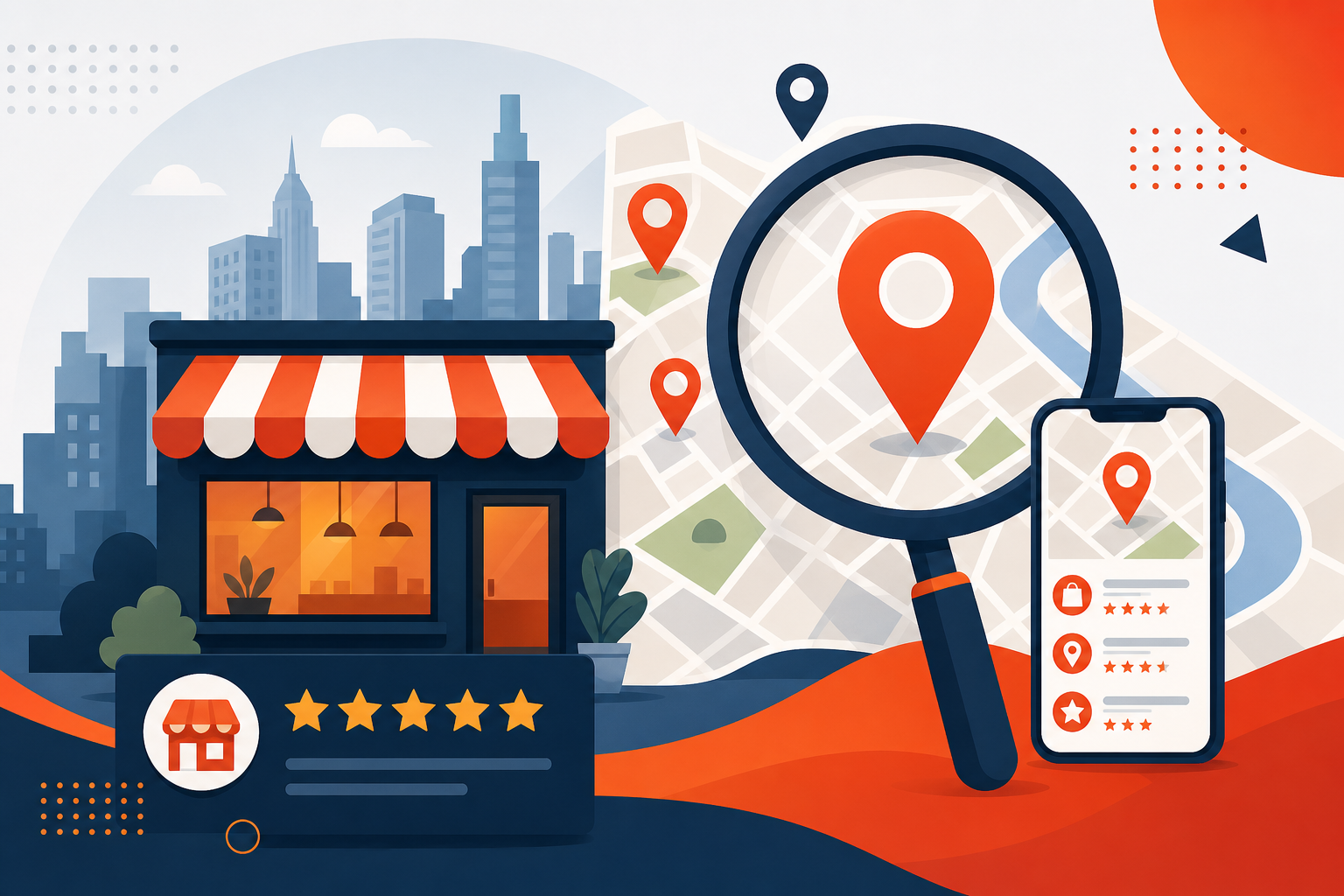
When someone pulls out their phone and searches “plumber near me” or “best coffee in town,” they are not browsing — they are ready to act. They will call, visit or buy within hours, often minutes. The only question is whose name they see first. For a small business, that moment is where local SEO earns its keep.
The encouraging part is that you are not competing with the entire internet. You are competing with the handful of businesses in your area, and most of them have not done the basics well. This guide walks through how local search works in 2026 and the practical steps to show up when nearby customers are looking, whether you serve a neighbourhood in the USA, a high street in the UK or a suburb in Australia.
What Local SEO Is and Why It Wins
Local SEO is the work of making your business visible to people searching nearby for what you offer. It is a different game from national SEO. Instead of ranking a blog post worldwide, you are trying to appear when someone close to you searches with local intent — explicitly with “near me,” or implicitly because Google knows roughly where they are.
Google has said for years that a large share of searches have local intent, and that a meaningful portion of people who search for something nearby visit a business within a day (Think with Google, 2019). That is high-intent traffic you can win without an enormous budget, because the playing field is just your local market.
The Map Pack: Local Real Estate Worth Owning
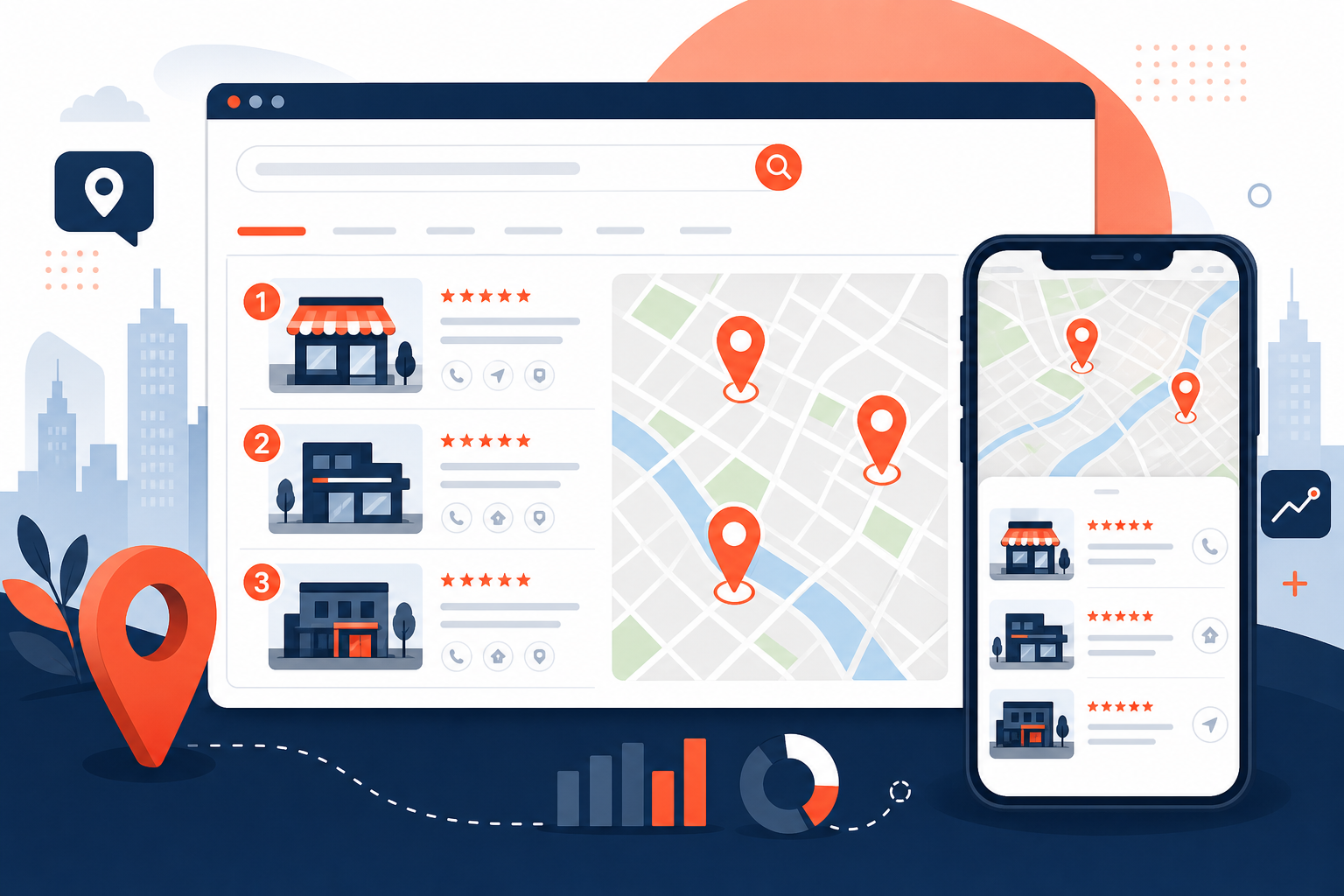
For most local searches, Google shows a map with three business listings pinned above the normal results. This “map pack” (or “local pack”) is the most valuable space in local search, because it appears first and is built for quick action — call, directions, website.
Google has described three broad factors behind which businesses appear there (Google Business Profile Help, 2024):
- Relevance. How well your profile matches what the person searched for.
- Distance. How close you are to the searcher or the location in their query.
- Prominence. How well known and well regarded your business is — shaped by reviews, links, citations and overall web presence.
You cannot change distance, but you have real influence over relevance and prominence. That is where the rest of this guide focuses.
Get Your Google Business Profile Right
Your Google Business Profile is the engine of local SEO. It is free, and a complete, active profile usually beats a neglected one even when the neglected business is bigger. Make sure you:
- Claim and verify your profile so you control the information.
- Choose the most accurate primary category, then add relevant secondary categories. This single choice has a big effect on which searches you show up for.
- Fill in every field — hours, phone, website, services, attributes and a genuine business description.
- Add real photos of your premises, team and work. Profiles with quality photos tend to attract more clicks and visits.
- Use Google Posts to share offers and updates, signalling that the business is active.
- Keep hours accurate, especially around holidays. Nothing erodes trust faster than a “closed” door when Google said you were open.
Treat the profile as a living asset, not a one-time setup. Activity is itself a signal.
Reviews: Your Most Underrated Ranking Factor

Reviews do double duty: they help you rank, and they convince the person reading them to pick you. They feed the “prominence” factor, and they are often the deciding nudge when someone is comparing three similar businesses in the map pack.
A simple review strategy
- Ask, consistently. Most happy customers are glad to leave a review — they just need a gentle prompt and an easy link.
- Make it effortless. Share a direct link by text or email right after a good experience.
- Reply to every review, positive or negative. A calm, helpful response to criticism often impresses readers more than a wall of five stars.
- Never buy fake reviews. It violates Google’s policies, risks your profile, and customers can usually smell it.
Aim for a steady trickle of genuine reviews rather than a sudden, suspicious spike. Recency matters too — a review from last week carries more weight than one from three years ago.
Citations and NAP Consistency
A citation is any online mention of your business name, address and phone number — your “NAP.” They appear in directories like Yelp, industry listings, chambers of commerce and local guides. Google cross-checks these to confirm your business is real and exactly where you say it is.
The golden rule is consistency. If your address is written one way on your site, another on Yelp and a third on an old directory, you send mixed signals. Make sure your name, address and phone number are identical everywhere, down to the abbreviations. When you move or change your number, update your major listings promptly — stale citations quietly drag on rankings.
On-Site Local SEO and Content
Your website still matters; it is the home base your profile and citations point to. A few high-impact on-site moves:
- Add LocalBusiness schema so search engines can read your name, address, hours and service area in a structured way.
- Create dedicated location or service-area pages if you serve multiple towns — each with genuinely useful, distinct content, not the same paragraph with the place name swapped.
- Mention your area naturally in titles, headings and copy, without stuffing it awkwardly.
- Publish locally relevant content — guides, case studies and answers to questions your local customers actually ask.
- Make sure the site is fast and mobile-friendly, because most local searches happen on a phone. A well-built site supports this from the ground up, which is exactly what our web design and SEO services are built to deliver.
Local SEO rewards businesses that are genuinely helpful and genuinely present in their community. The tactics simply make that presence legible to search engines.
Frequently Asked Questions
What is local SEO?
Local SEO is optimising your online presence so your business shows up when nearby people search for what you offer. It centres on Google Business Profile, the map pack, reviews, citations and location-relevant content.
How long does local SEO take to work?
Most small businesses see meaningful movement in three to six months. A well-optimised Google Business Profile can deliver quicker wins, while competitive markets and brand-new sites take longer to build reviews, citations and authority.
Is Google Business Profile free?
Yes, it is completely free to create and manage. It is the most important local SEO asset for most businesses because it powers your presence in Google Maps and the local map pack.
How many reviews do I need to rank locally?
There is no magic number — what matters is being competitive in your specific market and keeping reviews recent and genuine. A steady flow of authentic reviews, with replies, beats a one-off burst every time.
Do I need a website for local SEO?
You can rank in the map pack with a strong profile alone, but a fast, mobile-friendly website with local content and schema markedly strengthens your relevance and prominence — and gives customers somewhere to convert.
Win Customers in Your Own Backyard
Local SEO is one of the highest-return investments a small business can make, because it puts you in front of people who are ready to buy and only a short distance away. Nail your Google Business Profile, earn genuine reviews, keep your details consistent and back it with a solid website — and you will be the name local customers see first.
Want to dominate local search in your area?
References
- Think with Google. “Near me searches and local intent.” thinkwithgoogle.com, 2019.
- Google Business Profile Help. “Improve your local ranking on Google.” support.google.com, 2024.