


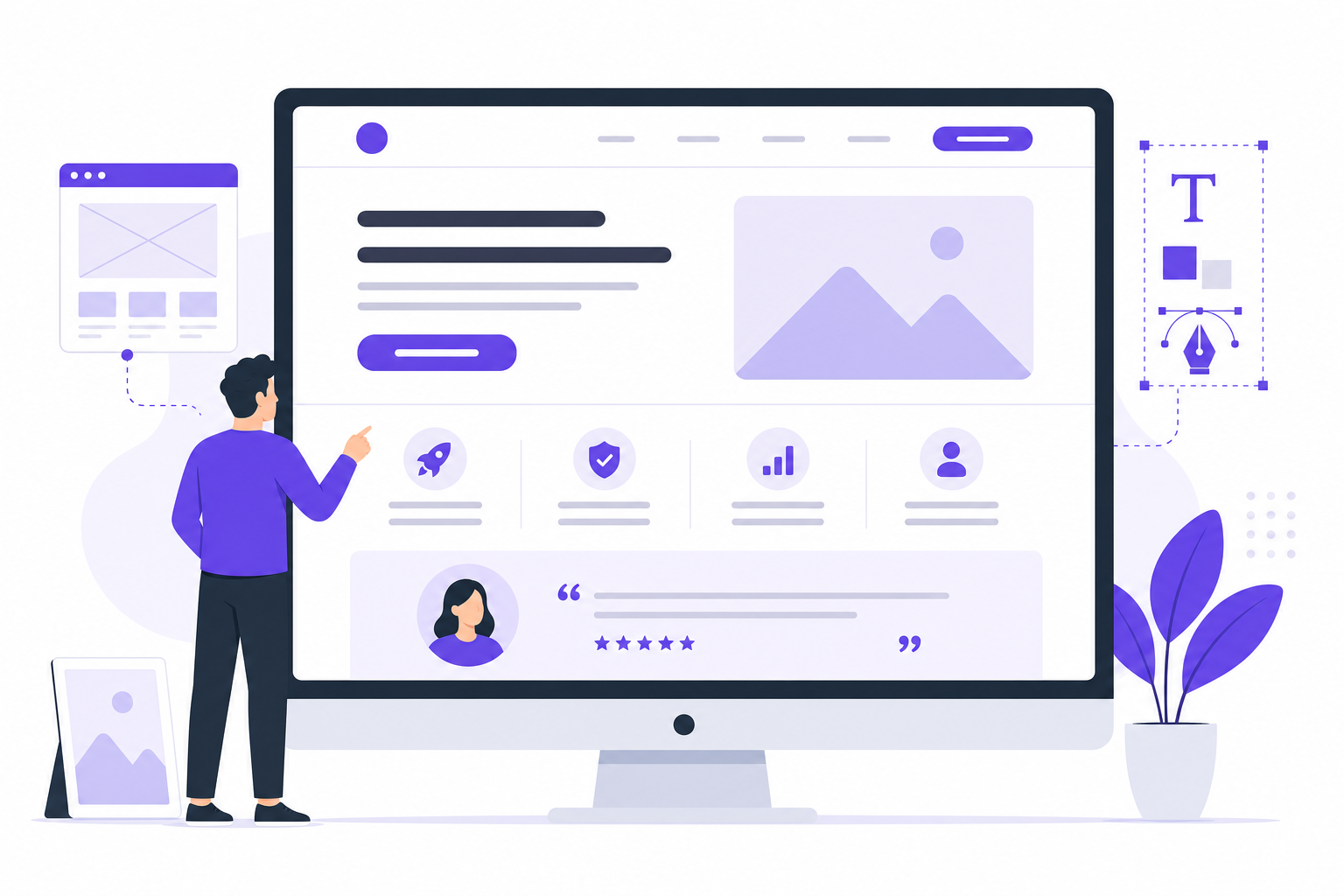
Every paid click, email link and social ad deserves a destination built to convert. Yet many businesses still send traffic to generic homepages cluttered with navigation, secondary offers and distractions that dilute intent. A purpose-built landing page focuses attention on one outcome — sign up, book a demo, purchase or download — and is one of the highest-leverage assets in digital marketing.
This complete guide covers landing page design from first principles through 2026 trends, proven best practices and patterns you can recognize in real-world examples. Whether you run campaigns in the United States, United Kingdom or Australia, these principles apply across industries and traffic sources.
What Is a Landing Page (and How Is It Different From a Homepage)?
A landing page is a standalone web page created for a specific marketing campaign or audience segment. Unlike a homepage, which serves many goals and audiences, a landing page typically removes global navigation and presents a single primary call-to-action (CTA). Message match between the ad or email and the page headline is critical: visitors should immediately feel they arrived in the right place (Nielsen Norman Group, 2020).
Common landing page types include:
- Lead generation pages — collect name and email in exchange for a guide, webinar or consultation.
- Click-through pages — warm visitors before sending them to checkout or a product page.
- Sales pages — long-form persuasion for a single product or offer.
- Squeeze / waitlist pages — minimal copy focused on early access signups.
If your campaigns underperform, the fix is often not more ad spend but a clearer, faster, more credible landing experience aligned with user intent.
Anatomy of a High-Converting Landing Page
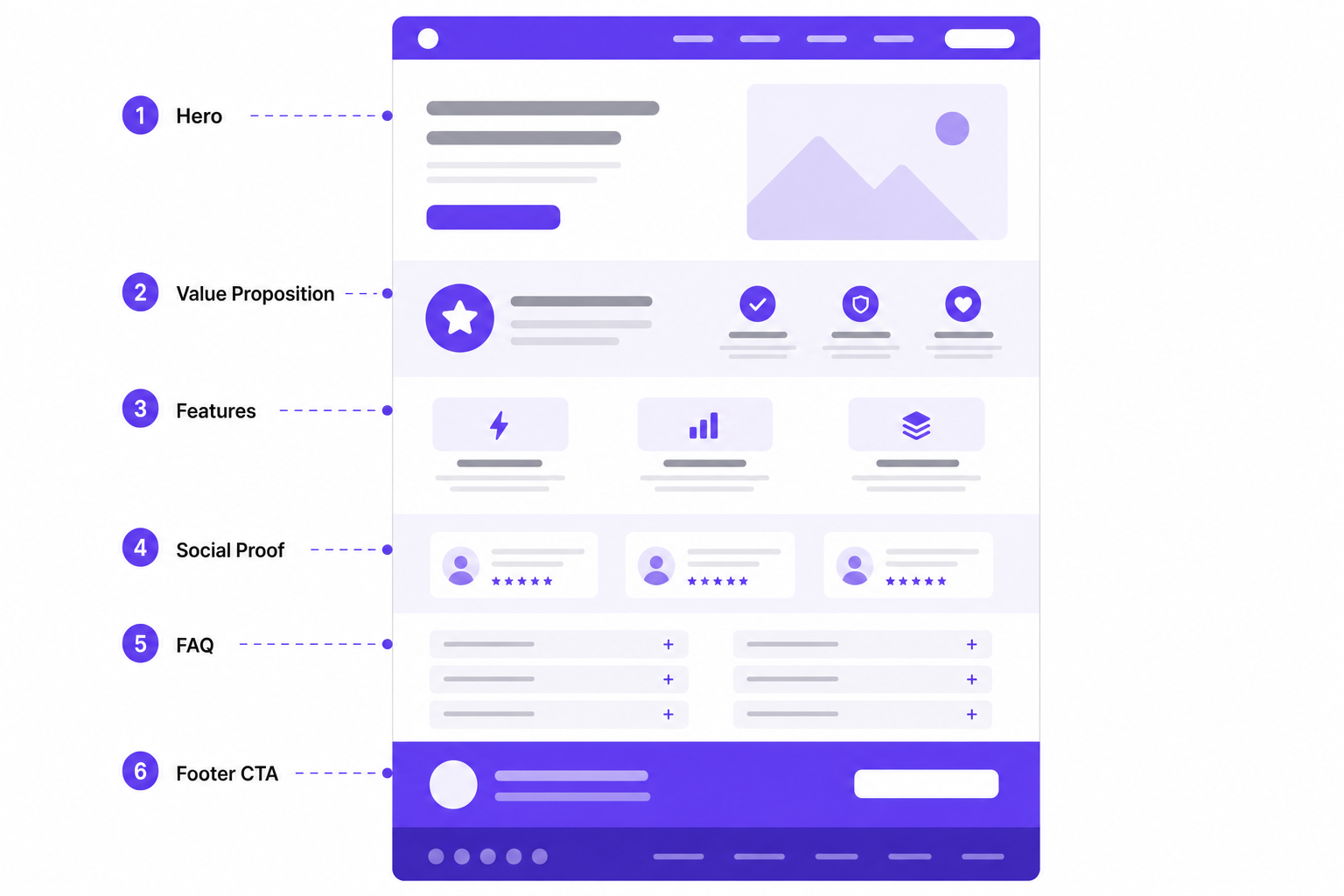
While layouts vary, most high-performing pages include these building blocks in a deliberate sequence:
1. Above-the-Fold Hero
Visitors decide within seconds whether to stay. Your hero should contain a benefit-driven headline, supporting subheadline, primary CTA and optional hero image or product visual. Avoid clever wordplay that obscures what you offer.
2. Value Proposition and Benefits
Explain why your offer matters in customer language. Use bullet points, icons or short cards to scan benefits quickly. Lead with outcomes (“Cut reporting time by 40%”) rather than features alone (“Automated dashboards”).
3. Social Proof
Testimonials, logos, review scores and case study snippets reduce perceived risk. Place proof near CTAs where hesitation peaks.
4. Objection Handling
FAQs, guarantee badges, security icons and comparison tables address doubts before visitors leave. B2B pages often need more detail here than simple lead magnets.
5. Repeated CTAs
Repeat your primary action after major sections. Sticky mobile CTAs help capture intent on long pages without forcing users to scroll back to the top.
Landing Page Design Best Practices
Write Headlines for Skimmers
Your headline should answer: What is this? Who is it for? What do I get? Subheadlines can clarify scope, pricing or time commitment. Unbounce’s research on conversion copy consistently emphasizes clarity over creativity when traffic is cold (Unbounce, 2024).
Design CTAs That Look Clickable
Use high-contrast button colors that still fit your brand. Action-oriented labels (“Book My Free Audit”) outperform vague labels (“Submit”). Keep secondary links minimal so the primary CTA dominates visually.
Reduce Form Friction
Every field you add lowers completion rates. Ask only what you need for the next step. Multi-step forms can outperform long single-step forms for complex B2B offers when progress is visible.
Optimize for Mobile First
With mobile accounting for the majority of ad clicks in many industries, thumb-friendly buttons, readable type (16px+ body text) and fast load times are non-negotiable. Test on real devices, not only desktop browsers.
Prioritize Speed and Stability
Slow pages waste ad budget. Google’s Core Web Vitals measure loading, interactivity and visual stability — all of which affect user experience and can influence organic visibility (web.dev, 2024). Compress images, defer non-critical scripts and avoid layout-shifting embeds above the fold.
Maintain Visual Hierarchy
Use whitespace, typographic scale and color to guide the eye. One column layouts often outperform busy multi-column heroes on mobile because they reduce cognitive load.
Need a landing page built to these standards? Our web design and development team creates campaign-ready pages integrated with your analytics and CRM.
Trends Shaping Landing Pages in 2026
Design trends should never override conversion fundamentals, but several patterns are gaining traction because they improve clarity or trust:
- Interactive demos and product embeds. SaaS brands let visitors explore core workflows before signing up, shortening the gap between promise and proof.
- AI-personalized headlines. Dynamic copy based on industry, geography or referral source improves message match at scale when implemented ethically and tested.
- Video heroes with captions. Short autoplay-muted demos can lift engagement, but always provide captions and a static fallback for accessibility and low-bandwidth users.
- Bento-style benefit grids. Modular card layouts organize dense information into scannable sections that adapt well to responsive breakpoints.
- Social proof in real time. Live counters (“127 teams joined this week”) and recent signup notifications can increase urgency when truthful and verifiable.
- Privacy-forward forms. Clear consent language and minimal data collection align with GDPR, UK GDPR and Australian Privacy Act expectations while building trust.
Adopt trends only when they support your conversion hypothesis. A fashionable layout that confuses visitors will underperform a plain, clear page every time.
Real-World Examples and Patterns to Learn From
You do not need to copy competitors verbatim to learn from the market. Study successful pages for patterns, then adapt them to your brand and offer.
Pattern 1: The Minimal Lead Magnet
Common in: B2B ebooks, checklists, newsletter signups.
Structure: Short headline, three bullet benefits, email field, single CTA, one testimonial.
Why it works: Low commitment matches low traffic temperature; friction is minimal.
Pattern 2: The Product-Led SaaS Demo
Common in: Software free trials and freemium tools.
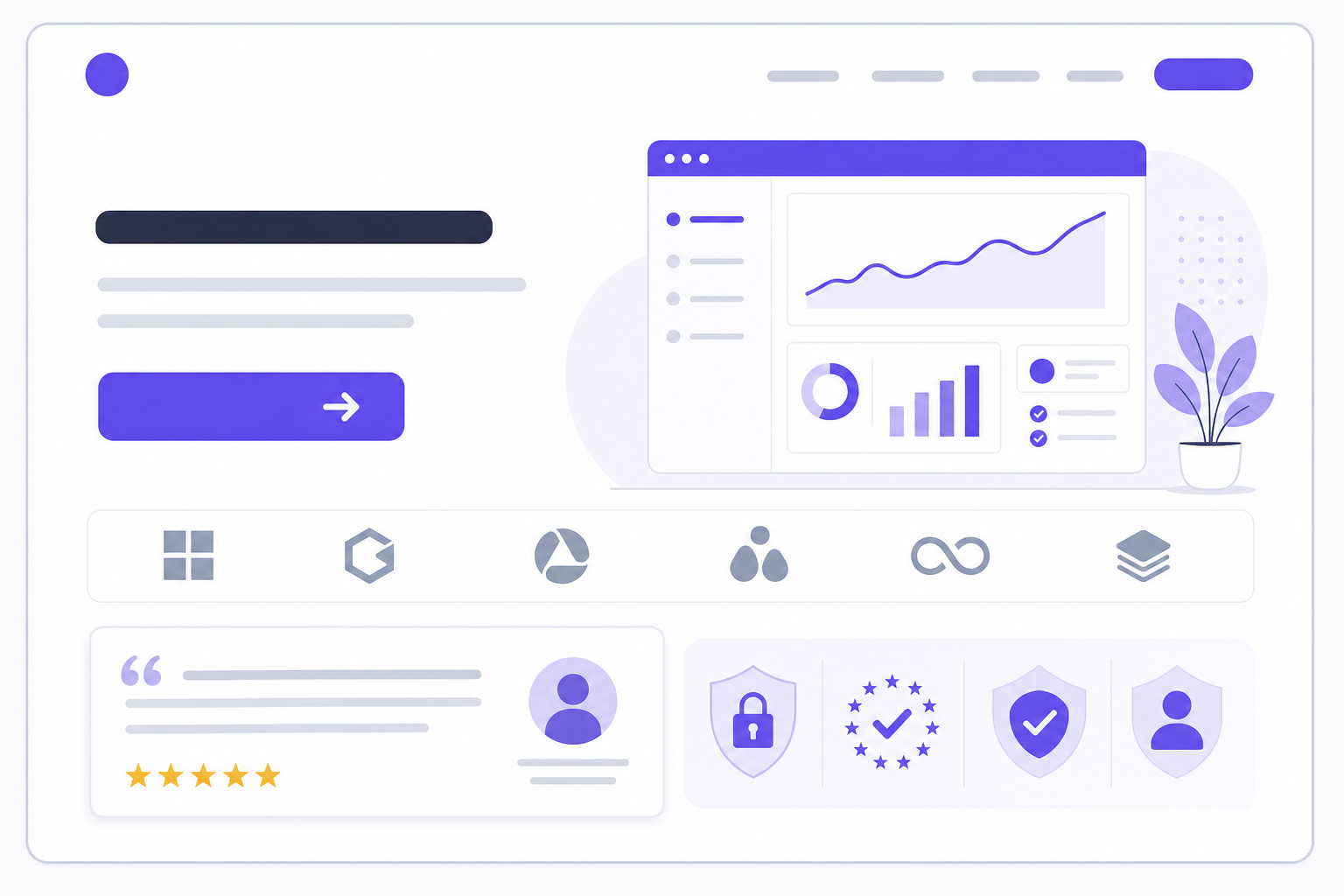
Structure: Product screenshot or interactive demo, integration logos, feature trio, pricing teaser, “Start free” CTA.
Why it works: Shows the product instead of only describing it, reducing uncertainty for technical buyers.
Pattern 3: The Long-Form Sales Page
Common in: Courses, agencies, high-ticket services.
Structure: Story-driven sections, detailed FAQs, multiple testimonials, guarantee, repeated CTAs.
Why it works: Educates skeptical buyers who need more proof before purchasing.
Pattern 4: The Local Service Landing Page
Common in: Home services, clinics, legal and financial advisors.
Structure: Location-specific headline, click-to-call button, reviews from Google, before/after gallery, short form.
Why it works: Matches urgent intent and mobile behavior (call now, book today).
Pattern 5: The Event or Webinar Registration Page
Common in: Live workshops, product launches.
Structure: Date/time prominence, speaker credentials, agenda bullets, countdown, single registration CTA.
Why it works: Scarcity and schedule clarity drive immediate registration.
When reviewing examples from leaders in your space, document what they place above the fold, how many CTAs they use and what proof appears before the first form field. Build a swipe file, then test one change at a time on your own pages.
Testing and Continuous Optimization
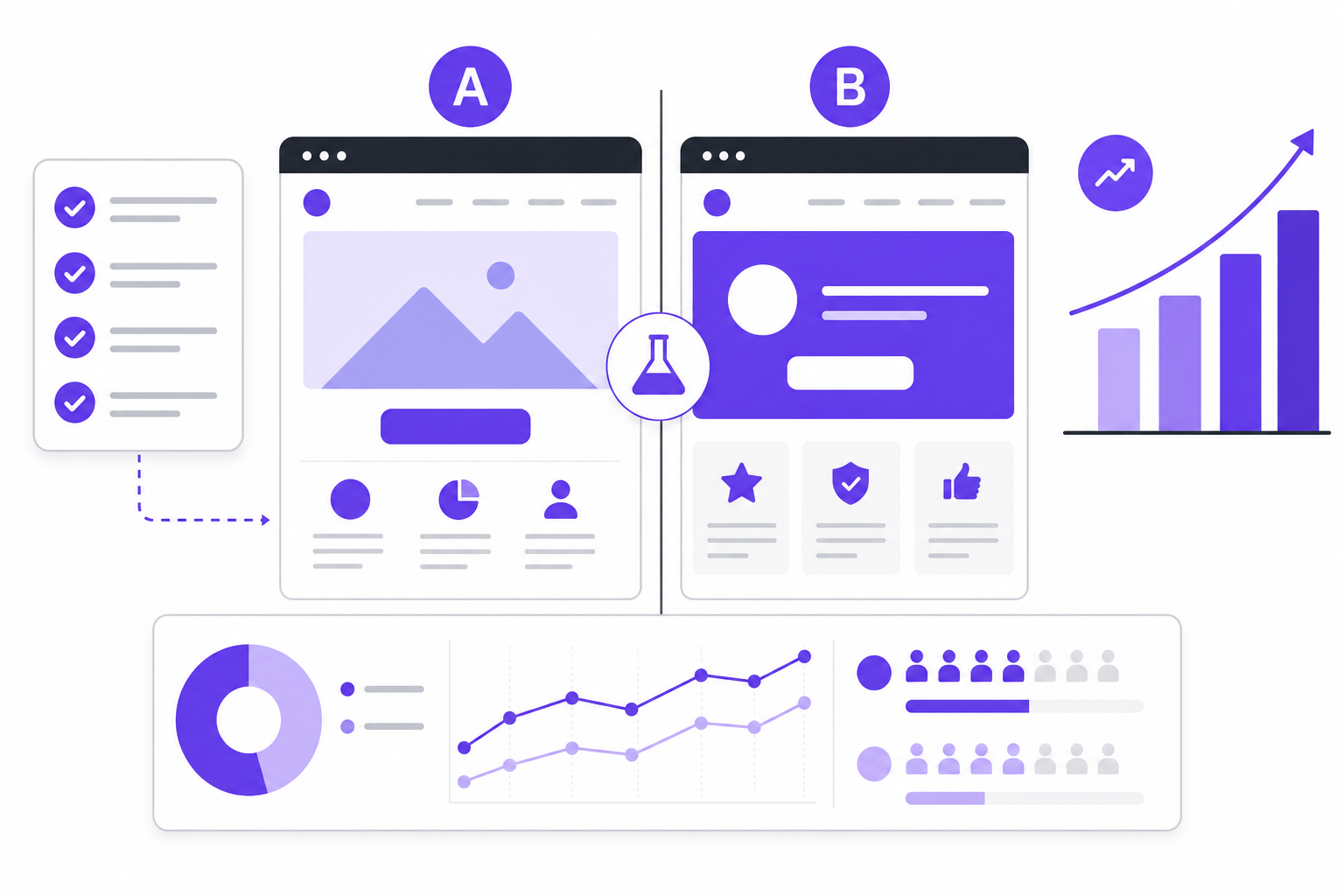
Launching a landing page is the beginning, not the end. Conversion rate optimization (CRO) relies on hypotheses, experiments and statistical discipline.
What to Test First
- Headline and hero offer — largest impact on message match.
- Primary CTA copy and placement — often lifts conversions quickly.
- Form length and fields — balance lead quality vs. volume.
- Social proof type — logos vs. video testimonials vs. metrics.
- Page length — short vs. long for your audience.
Run one meaningful test at a time where possible, ensure adequate sample size and avoid calling winners too early. Tools such as Google Optimize alternatives, VWO and built-in ad platform experiments can all support this workflow.
Measure What Matters
- Conversion rate by traffic source and device
- Cost per acquisition for paid campaigns
- Bounce rate and scroll depth to diagnose above-the-fold issues
- Lead quality downstream (sales accepted leads, close rate)
A page that maximizes form fills but sends unqualified leads is not a win. Align marketing and sales on success metrics before you optimize.
Frequently Asked Questions
What makes a high-converting landing page?
A high-converting landing page delivers a clear value proposition above the fold, matches the message from your ad or email, minimizes distractions, includes credible proof and makes the next step obvious with a prominent CTA. Speed, mobile usability and trustworthy design are equally important.
How long should a landing page be?
Length should match offer complexity and awareness level. Simple downloads may need only a short page; expensive or technical offers often require long-form content with case studies and FAQs. Use testing to find the right depth for your audience rather than following generic rules.
What is a good conversion rate for a landing page?
Industry medians often range from roughly 2% to 5%, while well-optimized pages in strong markets can exceed 10%. Compare against your own historical performance and traffic source, not only public benchmarks.
Should I remove navigation from landing pages?
Usually yes for paid campaign pages, so visitors stay focused on one goal. You may keep a minimal logo link or essential legal links. Content marketing landing pages sometimes retain limited nav when the audience expects to explore.
How much does a custom landing page cost?
Custom landing pages typically range from $1,500 to $8,000+ depending on copy support, design complexity, integrations and testing setup. Template-based builds cost less but may limit differentiation. View our services for scope and pricing guidance.
Ready to Build Landing Pages That Convert?
Great landing page design combines psychology, clarity and technical performance. By following proven structure, staying current with trends that actually help users and learning from real-world patterns, you turn traffic into measurable revenue. Veltrix Tech designs and develops landing pages for businesses across the USA, UK and Australia — from single campaign pages to full conversion programs.
Let’s build a landing page that pays for itself.
References
- Nielsen Norman Group. “10 Usability Heuristics for User Interface Design.” nngroup.com, 2020.
- Unbounce. “Conversion Rate Optimization.” unbounce.com, 2024.
- web.dev. “Web Vitals.” web.dev, 2024.
- Google Search Central. “Understanding page experience in Google Search results.” developers.google.com, 2024.
- HubSpot. “How to Design and Optimize a High-Converting Landing Page.” blog.hubspot.com, 2024.